
Thank you for choosing Clinica Sierra Vista as a trusted partner in your patients’ care. Our pulmonology team, led by Dr. Hany S. Aziz and supported by our experienced nurse practitioners, is here to complement your primary care practice, not replace it. When you refer a patient to us, we provide expert pulmonology consultation and treatment, then guide them back to you for ongoing primary care. Your patients get timely specialty care while maintaining the continuity and trust of their relationship with you.

Submit a referral to pulmonology services
Primary phone number
For questions, referrals, scheduling, and after-hours support:
(661) 328-4000
FAX numbers
- Main Clinic Fax: (661) 869-1503
- Referrals Fax: (661) 328-4010
What to include
- Demographics
- Picture ID
- Insurance Card
- Authorization (if one is required)
- Referral
- Referring provider (Office information, Name, Phone, Fax Number)
- Reason for referral (diagnosis)
- Priority
- Supporting clinical notes, labs, and/or imaging
Patient appointment
Clinica Sierra Vista will contact the patient within one business day to schedule an appointment, which is typically set within three days of our initial contact. However, same-day appointments are available for urgent cases.
Clinica Sierra Vista sends appointment reminders by phone and text with patient consent.
Consultation report
A consultation report is faxed to the referring provider within one week of the visit.
The report includes visit notes, diagnostic test results, the treatment plan, and recommendations.
If your Electronic Health Records system supports the CareQuality network, these notes are also available through the health information exchange.
Accepted insurance and financial assistance
Clinica Sierra Vista accepts most insurance and managed care plans, including Medi‑Cal and Medicare. We also offer a sliding fee discount based on family size and income, and provide assistance with enrollment in Medi‑Cal, Covered California, and other programs.
For further assistance with any of our services call: 833-678-2781
Specialty Services Center location
Specialty Services Center – Now Open!
3801 San Dimas Street, Suite B, Bakersfield, CA 93301
Meet the pulmonology specialist


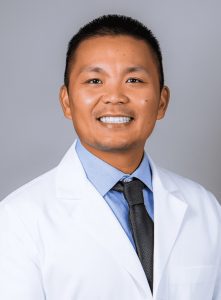


Conditions treated by our pulmonology team
Bronchial Asthma
Asthma is a condition in which your airways narrow and swell, and may produce extra mucus. This can make breathing difficult and trigger coughing, a whistling sound (wheezing) when you breathe out, and shortness of breath.
Chronic Obstructive Pulmonary Disease
An ongoing lung condition caused by damage to the lungs. COPD is most often caused by long-term exposure to irritating smoke, fumes, dust, or chemicals.
Valley Fever
Valley fever is a fungal infection. Coccidioides (kok-sid-e-OI-deze) organisms are the cause. Also called San Joaquin Valley fever, it can cause symptoms such as a fever, cough, and tiredness.
Emphysema
Emphysema is a long-term lung condition that causes shortness of breath. Over time, the condition damages the thin walls of the air sacs in the lungs called alveoli. In healthy lungs, these sacs stretch and fill with air when you breathe in.
Obstructive Sleep Apnea
Obstructive sleep apnea is the most common sleep-related breathing disorder. People with obstructive sleep apnea repeatedly stop and start breathing while they sleep. These breath pauses are known as apneas.
Pulmonary Embolism
A pulmonary embolism is a blood clot that blocks and stops blood flow to an artery in the lung. In most cases, the blood clot starts in a deep vein in the leg and travels to the lung. Rarely, the clot forms in a vein in another part of the body.
Pulmonary Fibrosis
Pulmonary fibrosis is a lung disease that occurs when lung tissue becomes damaged and scarred. This thickened, stiff tissue makes it harder for the lungs to work properly. Pulmonary fibrosis worsens over time. Some people can stay stable for a long time, but the condition gets worse faster in others.
Pulmonary Nodules
Lung nodules are small areas of tissue in the lungs that are denser than normal lung tissue. They usually do not cause symptoms, and most are scars from past lung infections. Although a lung nodule can be cancerous, the majority are not.
Respiratory Failure
Respiratory failure is a condition where there’s not enough oxygen or too much carbon dioxide in your body. It can happen all at once (acute) or come on over time (chronic). Many underlying conditions can cause it. Acute respiratory failure is life-threatening.
Smoking Cessation
Nicotine dependence happens when your body craves nicotine, and you can’t stop using it. For some people, using any amount of smoked tobacco can quickly lead to nicotine dependence.
Chronic Bronchitis
Bronchitis is an inflammation of the lining of your bronchial tubes. These tubes carry air to and from your lungs. People who have bronchitis often cough up thickened mucus, which can be discolored.
Tuberculosis (TB)
TB is a serious, contagious infectious disease primarily affecting the lungs. While the bacteria can remain inactive in the body without symptoms, active TB causes severe coughs, weight loss, and fever.
Additional conditions
- Pneumonia
- Occupational lung diseases


