
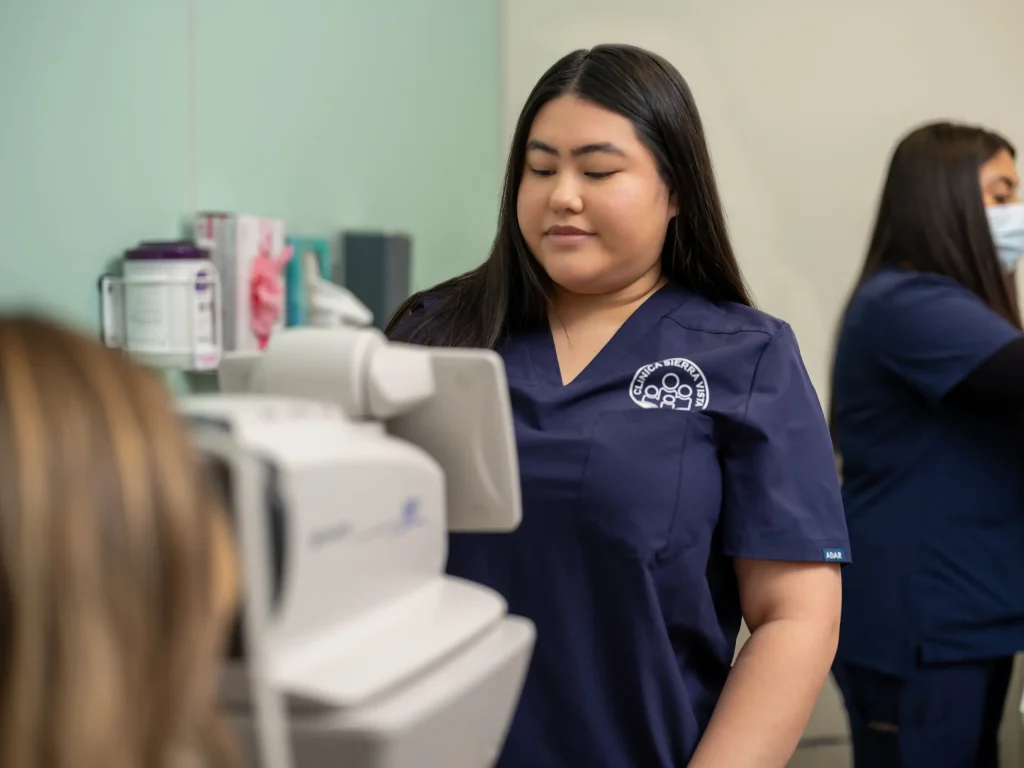
Eye Care That Supports Your Overall Health
Our Ophthalmology services provide expert care for your eye health, from routine exams to managing complex conditions. Regular eye exams and screenings are the foundation of our care, including vision assessments, diabetic retinopathy checks, and screenings for age-related macular degeneration (AMD) and glaucoma. These preventive services help protect your vision and detect potential issues early.
We diagnose and treat a range of eye conditions, such as refractive errors like myopia, hyperopia, astigmatism, and presbyopia. Our team also addresses eye diseases, including cataracts, glaucoma, AMD, diabetic retinopathy, and retinal disorders like detachment and vein or artery occlusions. For infections and inflammations, we treat conjunctivitis, blepharitis, uveitis, and corneal ulcers or infections with precision and care.
In cases of eye injuries or emergencies, we provide attention for issues like foreign body removal, trauma, or corneal ulcers. When surgical intervention is necessary, we coordinate referrals for specialized procedures, including cataract, glaucoma, and retinal surgeries, ensuring seamless access to advanced care.
At every stage, our focus is on preserving and enhancing your vision while supporting your overall eye health with compassionate, expert care tailored to your needs.
Ophthalmology services
- Comprehensive eye exams and vision screenings
- Diabetic retinopathy screenings
- Glaucoma screenings
- Age-related macular degeneration screenings
- Diagnosis and treatment for common eye conditions
- Care for eye infections, inflammation, and dry eye
- Evaluation of eye injuries or urgent eye concerns
- Referrals for specialized eye procedures, including cataract, glaucoma, or retinal surgery
Conditions we care for
Our team can help evaluate and manage a range of eye conditions, including:
- Refractive errors, such as nearsightedness, farsightedness, astigmatism, and age-related changes in near vision
- Cataracts
- Glaucoma
- Diabetic retinopathy
- Age-related macular degeneration
- Retinal conditions
- Dry eye syndrome
- Conjunctivitis
- Blepharitis
- Uveitis
- Corneal infections or ulcers
- Eye trauma or foreign body concerns
FAQs
What Should I Expect During an Eye Exam?
During an eye exam, your ophthalmologist will check your vision, evaluate the health of your eyes, and assess for any signs of eye diseases such as glaucoma, cataracts or retinal problems. The exam may include measuring your vision, eye pressures, and looking at the internal structures of your eyes using specialized instruments.
What Are the Signs That I Need To See an Ophthalmologist?
If you experience blurry vision, sudden vision, pain in your eyes, redness, flashes of light, or difficulty seeing at night, its important to see an ophthalmologist promptly.
What Is the Difference Between an Ophthalmologist, Optometrist, and Optician?
An ophthalmologist is a medical doctor who specializes in eye diseases and surgery. An optometrist provides primary vision care including vision testing, prescribing glasses or contacts and diagnosing certain eye conditions. An optician is a technician who helps fit and dispense glasses or contacts based on prescriptions from an ophthalmologist or optometrist.

